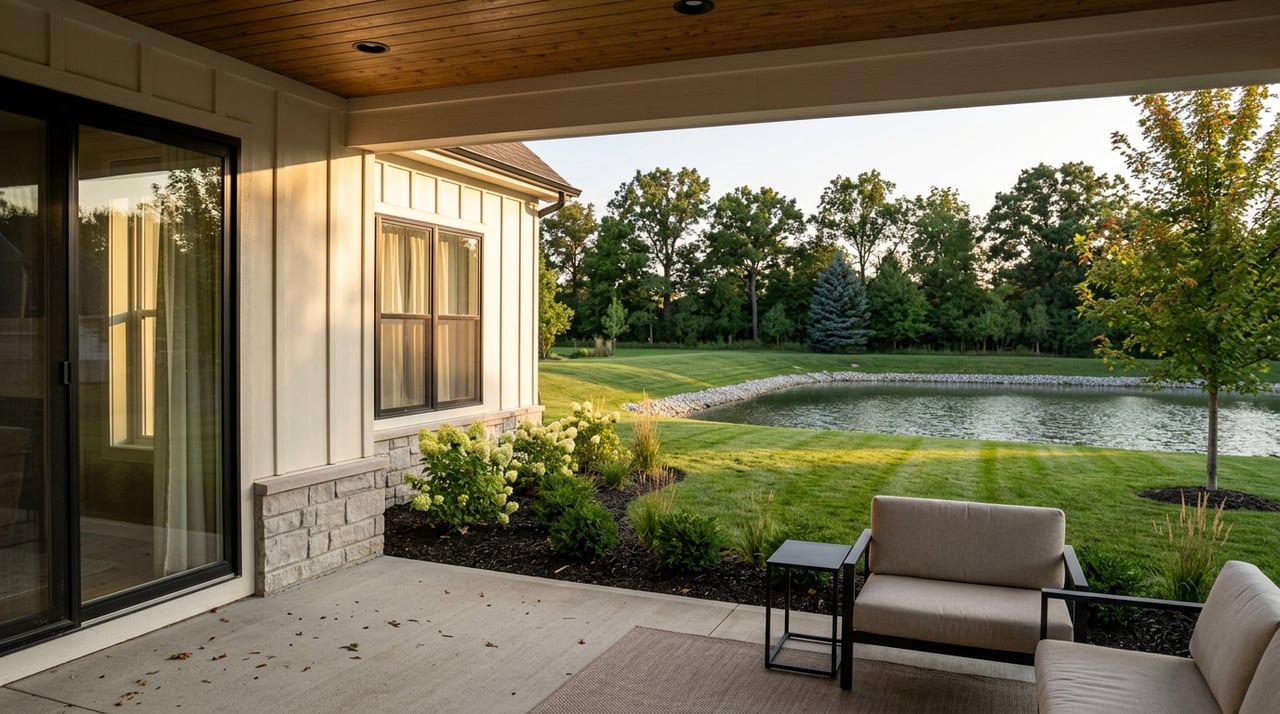
If you want a place where lake days, neighborhood growth, and a small-town downtown can all be part of your routine, Polk City stands out. You may be looking for more outdoor access, a quieter home base, or a community that still keeps Des Moines within an easy drive. The good news is that Polk City offers a mix of recreation, convenience, and suburban housing that appeals to many buyers. Let’s take a closer look at what it is really like to live in Polk City near the lakes.
Polk City offers a lake-centered lifestyle
One of the biggest draws of Polk City is its setting. The city sits about 16 miles northwest of downtown Des Moines, with Saylorville Lake to the west and south and Big Creek State Park to the north. That geography shapes daily life in a way that feels different from many other metro suburbs.
Instead of needing to plan a full weekend trip to enjoy the outdoors, you can live close to trails, water, and park space. For many residents, that means boating, fishing, hiking, biking, or simply spending more time outside during the warmer months. The outdoor setting is not just a bonus here. It is a core part of the community’s identity.
Saylorville Lake is part of everyday life
Saylorville Lake is a 26,000-acre U.S. Army Corps of Engineers project on the Des Moines River. It supports camping, boating, fishing, hiking, biking, and wildlife watching. If you enjoy active weekends or relaxed evenings near the water, this access can be a major lifestyle upgrade.
Living near Saylorville can also make everyday life feel more flexible. You can fit in a walk, launch a boat, or enjoy the scenery without driving far from home. That kind of convenience matters when you are choosing where to live, especially if outdoor recreation is high on your list.
Big Creek adds even more recreation
Big Creek State Park gives Polk City another strong outdoor advantage. The park centers on Big Creek Lake and includes the largest beach in Iowa’s state park system. It also offers boat rentals, picnic shelters, playgrounds, disc golf, and accessible fishing and boating access.
The 27-mile Neil Smith Trail is another highlight. If you enjoy biking, running, or long walks, this trail adds real value to the area. It helps support a lifestyle where getting outside can be part of your weekly routine, not just an occasional outing.
Daily life feels small-town and practical
Polk City may be known for its lakes, but daily living is not only about recreation. The city also offers practical services and a compact downtown core that give it a comfortable small-town feel. That balance is a big reason people are drawn to the area.
You can enjoy local amenities without losing access to the broader Des Moines metro. For buyers who want a community that feels more personal while still staying connected, Polk City often hits that sweet spot.
Town Square creates a local gathering spot
Polk City’s Town Square is a 1-acre community park surrounded by restaurants, shops, and other local businesses. It includes a playground, picnic tables, benches, a historic bandstand, and a bike repair station. Local planning materials also describe the square as a place for dining, dessert, festivals, outdoor seating, and free public Wi-Fi.
That gives Polk City a central hub that supports both everyday errands and community events. You are not just buying a house here. You are buying into a place with a recognizable center where people gather, spend time, and enjoy local businesses.
Community services support everyday needs
The Polk City Community Library adds another layer of convenience. It offers free Wi-Fi, computer access, online research tools, e-book borrowing, interlibrary loan, meeting room space, notary services, and programming for youth and adults.
Polk City Parks & Recreation also provides programs, leagues, facility reservations, and special events. These kinds of services matter because they make day-to-day living easier and help support a more connected local experience.
Commuting from Polk City is mostly car-based
If you are thinking about living in Polk City, it helps to understand the commute reality. This is still a car-oriented community in practice. While there are trails and a downtown core, most residents rely on driving for work and many daily errands.
Census QuickFacts lists the mean travel time to work at 24.3 minutes. Planning materials and downtown assessments also show a walkability score of 43 and a bikeability score of 37 around the square. In simple terms, you may be able to bike or walk for some local trips, but a car will still be part of everyday life for most households.
Regional access is a major advantage
Polk City connects to the metro through Highway 415 and Highway 141. It is also roughly 7 miles west of Interstate 35 and 9 miles north of Interstate 80. That makes it easier to reach Des Moines and other parts of the region while still living outside the denser core.
For many buyers, that trade-off works well. You get more of a suburban setting with strong outdoor access, while keeping a manageable drive into work, shopping, or other metro destinations.
Trail connections may improve over time
City planning materials note a future trail connection between the Neal Smith Trail and the High Trestle Trail through Polk City. While that is a long-term mobility benefit rather than a current replacement for driving, it points to continued investment in recreation and connectivity.
That matters if you are thinking not just about where Polk City is today, but where it may be headed. Growth and infrastructure plans can shape long-term appeal.
Housing in Polk City is mostly detached homes
From a housing perspective, Polk City feels suburban and yard-oriented. The area is still dominated by detached single-family homes, which aligns with what many buyers expect when they picture living near the lakes in a growing north Polk County suburb.
According to the Census Bureau, the owner-occupied housing rate is 89.1%, and the median owner-occupied home value is $414,800. City planning materials say about 80% of residents live in single-family detached homes. That gives the community a consistent residential feel, with neighborhoods built around traditional suburban living patterns.
New construction is a big part of the market
Current city development projects list hundreds of new single-family lots in neighborhoods including Big Creek Commons, Antler Ridge, Monarch Crossing, Big Creek Ridge, and Sunrise Ridge. That level of activity helps explain the city’s recent growth and gives buyers more options, especially if you are considering a newer home.
This is one reason Polk City often appeals to buyers who want modern layouts, newer finishes, or the chance to personalize aspects of a home. If you are weighing resale versus new construction, Polk City offers a market where both conversations are worth having.
Housing types may broaden over time
Planning materials also call for a broader housing mix in the future, including smaller single-family homes, townhomes, and apartments. Right now, the overall feel remains centered on detached homes, but the long-term vision suggests more variety may come with continued growth.
That could create more options for buyers at different stages of life. Even so, if you move to Polk City today, the dominant experience is still a suburban community built around single-family neighborhoods.
Polk City is growing quickly
Growth is a meaningful part of the Polk City story. The city’s 2024 special census counted 6,533 residents, which was up 990 people from the 2020 census. That kind of increase helps explain why you see active development and expanding neighborhoods.
For buyers, growth can bring both opportunity and change. You may find newer housing options, ongoing investment, and a community that is gaining momentum. At the same time, it is wise to think through what kind of pace and setting feel right for you.
Who tends to enjoy living here
Polk City can be a strong fit if you want close access to lakes and trails, a compact town center, and a residential setting that feels more spacious than a denser urban neighborhood. It can also appeal if you want to stay connected to Des Moines without living in the middle of the city.
This area may be especially appealing if you are drawn to:
- Outdoor recreation near home
- Detached homes with a more suburban layout
- New construction opportunities
- A small-town community feel
- Car access to the broader metro
If your top priority is a highly walkable lifestyle with most errands handled on foot, Polk City may feel less convenient than some other areas. But if you value space, recreation, and regional access, it offers a compelling mix.
What to keep in mind as you explore Polk City
Every move comes down to fit. Polk City offers a lifestyle that blends lake access, neighborhood growth, and practical day-to-day convenience. The question is whether that mix matches how you want to live.
As you compare homes and neighborhoods, it helps to think about your routine. How important is new construction? How often do you want to be on the water or on the trails? How much does commute time matter? Those answers can help you decide if Polk City feels like home.
If you are considering a move to Polk City, working with a team that understands both resale homes and new construction can make the process much smoother. To talk through neighborhoods, home options, and what fits your goals, connect with Andrew Bruellman.
FAQs
What is daily life like in Polk City near the lakes?
- Daily life in Polk City often includes easy access to Saylorville Lake, Big Creek State Park, local trails, and a small-town downtown with shops, restaurants, and community events.
Is Polk City a good place for outdoor recreation?
- Polk City offers strong outdoor access with boating, fishing, camping, hiking, biking, wildlife watching, a large beach at Big Creek State Park, and the 27-mile Neil Smith Trail nearby.
Is Polk City close to Des Moines for commuting?
- Polk City is about 16 miles northwest of downtown Des Moines, and the mean travel time to work is 24.3 minutes, with access to the region through Highway 415, Highway 141, Interstate 35, and Interstate 80.
What kind of homes are common in Polk City?
- Polk City is mostly made up of detached single-family homes, with a high owner-occupied housing rate and ongoing neighborhood growth that includes many new single-family lots.
Is Polk City walkable for everyday errands?
- Polk City has a downtown square and trail access, but it is still mostly car-oriented, with walkability and bikeability scores that suggest driving remains the main way residents get around.
Is new construction available in Polk City?
- Yes. Current development projects in Polk City include hundreds of new single-family lots in neighborhoods such as Big Creek Commons, Antler Ridge, Monarch Crossing, Big Creek Ridge, and Sunrise Ridge.